Strange Tales of the Aokigahara Forest (Aokigahara Jukai) in Yamanashi Prefecture: The “Suicide Forest”
一片真实森林如何被传说改写成「自杀胜地」
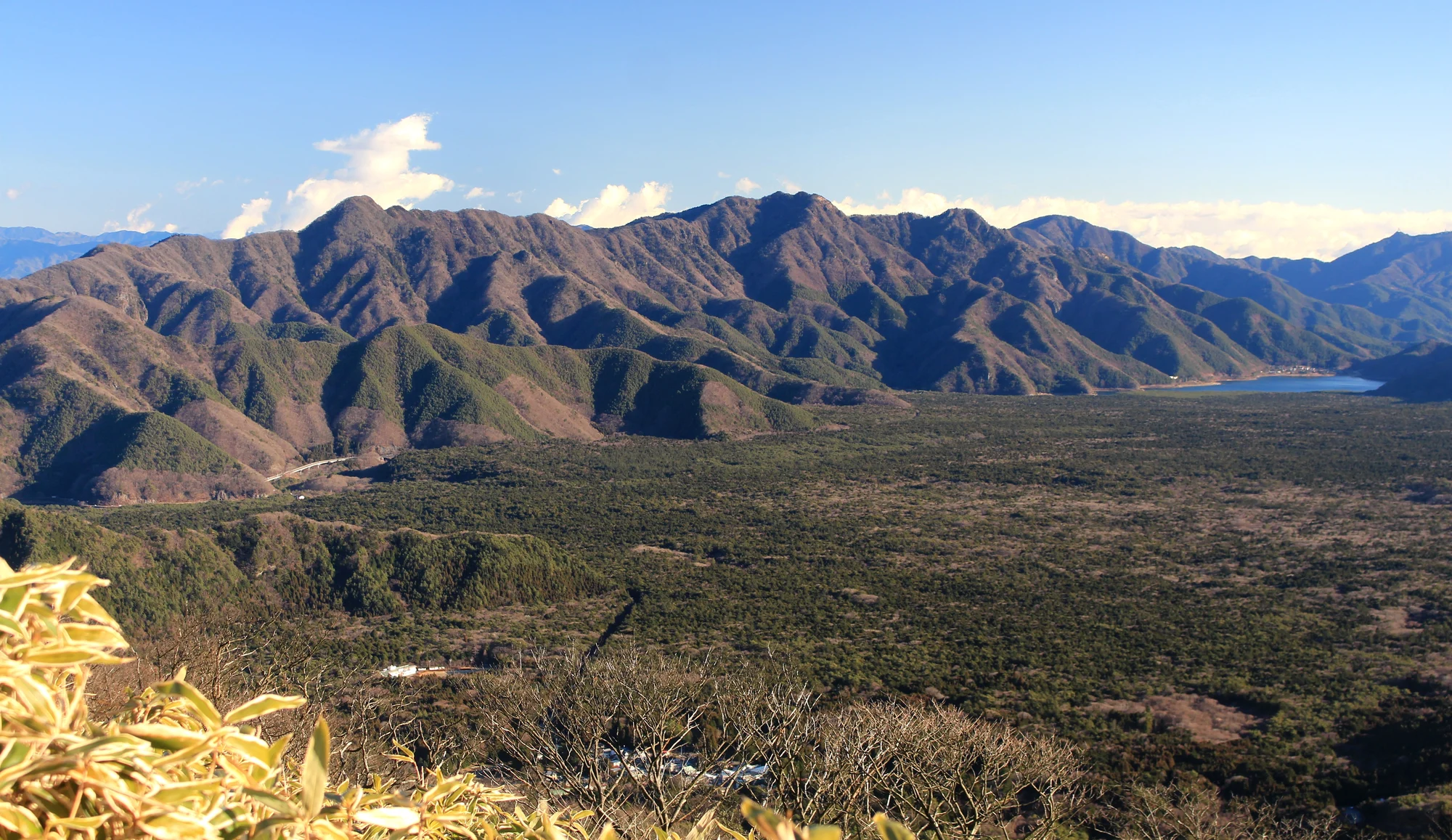
The Aokigahara Forest is a real lava-field forest on the northwestern slope of Mount Fuji. Its labeling as the “Suicide Forest” has given rise to numerous urban legends, including compass malfunctions, figures seen among the trees, and discarded ropes.
- 发生地点
- 日本 · 山梨县
- 发生时间
- 1950-01-01
- 浏览量
- 8
- 评论
- 0
真实性声明
民间传说:属于民间流传故事,缺乏事实证据
本档案区分历史事实、媒体报道、民间传说与未经证实的用户报告。 未经独立印证的目击陈述与坊间传闻均已标注来源性质,不作为已发生的事实呈现。
事件档案
Overview
In Chinese-language online contexts, “Japan’s suicide forest” almost invariably refers to the Aokigahara Forest (Aokigahara Jukai) on the northwestern slope of Mount Fuji in Yamanashi Prefecture. 【Confirmed Fact】The Aokigahara Forest (Aokigahara Jukai) is located on the northwestern foothills of Mount Fuji in Japan, spanning Fujikawaguchiko Town (Fujikawaguchikō-machi) and Narusawa Village (Narusawa-mura) in Yamanashi Prefecture. Around it are barrier lakes such as Lake Sai (Sai-ko), Lake Shōji (Shōji-ko), and Lake Motosu (Motosu-ko). Its terrain derives from the large-scale eruption of Mount Fuji in 864 CE; after the lava cooled, a plateau formed, with elevations of roughly 900 to 1,300 meters and an area of more than 30 square kilometers. It supports extensive stands of relatively young primary forest and is among the least human-disturbed areas around Mount Fuji. Because its dense canopy appears to sway like waves when viewed from a neighboring mountain, it came to be known as “Jukai,” or “sea of trees.” National Route 139 passes through it, and public facilities such as forest-bathing trails and campsites have been built within the woodland.
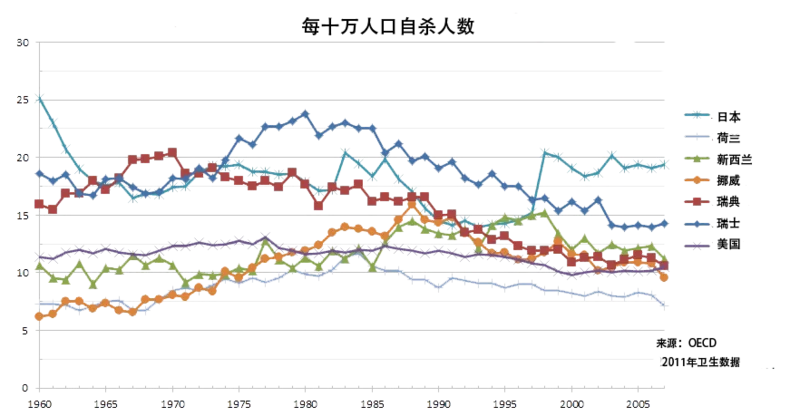
【Confirmed Fact】Suicide is a significant social problem in Japan. In 2014, an average of about 70 people died by suicide each day, the great majority of them men. Since 2012, Japan’s annual suicide count has remained below 30,000 for several consecutive years. This archive does not address the general phenomenon of “suicide in Japan,” but rather the process by which this actual forest was labeled the “Suicide Forest” and how a large body of supernatural and urban legends grew around it—that is, the strange tales of the “Suicide Forest” associated with the Aokigahara Forest from the mid-20th century to the present.
Origins and Transmission
【Unverified】The most frequently cited account holds that in 1960, in the serialized novel The Tower of Waves (Nami no Tō), Matsumoto Seichō depicted the female protagonist ending her life in the Aokigahara Forest; thereafter, readers allegedly came to regard the place as an “ideal site of finality,” and the number of people going into the forest to die increased. Matsumoto Seichō was indeed a representative writer of Japanese social school detective fiction (1909–1992), whose works used detective methods to examine the social roots of crime; The Tower of Waves does exist. However, the causal claim that “a single novel triggered a suicide wave” is a long-circulating assertion rather than an established fact. 【Inference】Attributing a complex social problem of suicide to a single literary work is itself more like a narratively simplified account designed for easy circulation: it provides an “origin story” for a forest that was already prone to accidents because of its complex terrain, and where suicides had in fact occurred.
【Unverified】Another repeatedly mentioned point of origin is the 1993 publication of The Complete Manual of Suicide (Kanshinjutsu Kōza / The Complete Suicide Manual), which listed the forest as one location. Online accounts often claim that the book was connected to a subsequent rise in suicides in the forest, but this association likewise remains at the level of rumor and lacks verifiable statistical support.
【Confirmed Fact】What can be established is that, through successive layers of media reporting, film and television works, and online content, the equation “Aokigahara Forest = Suicide Forest” became established first in Japanese-language and then in English-language spheres, and was subsequently re-imported into Chinese-language online spaces.
Witness Patterns or Course of Events
【Unverified】According to circulating accounts, police and fire brigades in Yamanashi Prefecture have entered the forest every autumn since the 1970s to conduct searches, repeatedly discovering the bodies of suicides; the name “Suicide Forest” was reinforced with each new report. The specific scale and figures of these search operations vary greatly among versions of the story, and this archive does not adopt any single number.
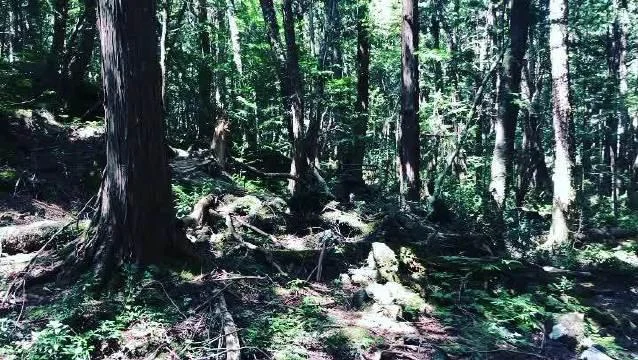
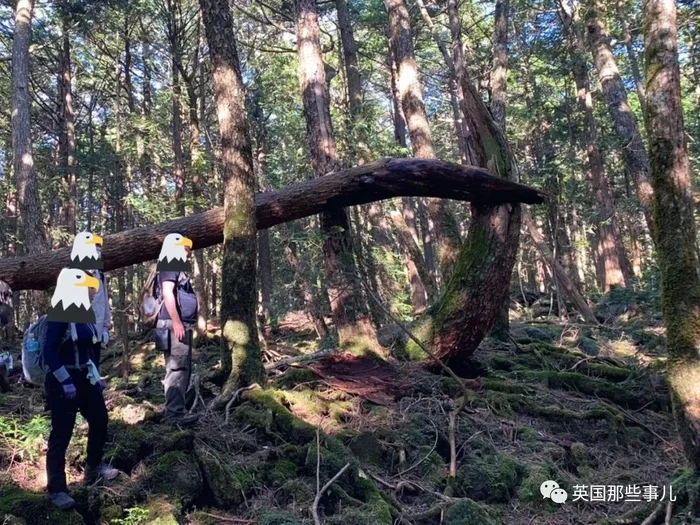
【Unverified】Visitors entering the forest most commonly describe two types of phenomena. The first is a loss of directional sense: compass needles spinning erratically, positioning devices drifting, walking in what seems to be a straight line yet returning to the same place, and eventually becoming lost. The second consists of things seen or heard among the trees: ropes, clothing, and plastic sheeting scattered among roots, as well as accounts of “seeing human figures” and “hearing weeping.”
【Inference】The claim of directional failure may be related to ferromagnetic minerals in the rocks of the lava plateau, the absence of visual reference points caused by canopy cover, and the monotonous undulations of the terrain; this is an explanation based on geology and environment, not a supernatural one. As for “human figures,” misidentification is highly likely in an environment with poor visibility, dense tree shadows, and strong psychological expectation.
【Unverified】Supernatural versions go further. Some accounts claim that in the depths of the forest “the dead tug at one’s clothing” or that “scripture recitation can be heard at night”; others say that people who pick up personal belongings in the woods subsequently encounter a run of misfortune. Such narratives usually appear in the form of “a friend of a friend” or “what a guide said,” and lack traceable eyewitnesses.
Related Similar Cases
The following relatively specific incidents are the most widely circulated concerning the same forest.
First, the serialization of Matsumoto Seichō’s The Tower of Waves (1960). 【Unverified】Media and online articles often trace this to the starting point of the forest’s image as a “suicide destination,” but, as noted above, the causal relationship is doubtful.
Second, annual search operations and the discovery of bodies (from the 1970s onward). 【Unverified】The autumn searches are the practical mechanism through which the “Suicide Forest” label has been continually reinforced.
Third, the publication of The Complete Manual of Suicide (1993). 【Unverified】This has been identified as one of the factors spreading the forest’s notoriety.
Fourth, the film Aokigahara (2015). 【Confirmed Fact】Directed by Gus Van Sant and starring Matthew McConaughey, the film is set in the Aokigahara Forest and further internationalized the label. 【Unverified】After release, the film received polarized reviews and was criticized for turning a real issue of suicide into spectacle.
Fifth, the film The Suicide Forest (2016). 【Confirmed Fact】A Japanese-American co-production, with a screenplay by Nick Antosca and others, the film tells the story of a woman who travels to Aokigahara to search for her missing sister. After release, it received negative reviews from European and American film critics, with some criticism arguing that it downplayed the issue of suicide and showed insufficient respect for those who had died in the forest.
Sixth, the online video controversy at the end of 2017. 【Unverified】According to a widely circulated online account, an American online video creator filmed the body of a suicide in the forest and uploaded the footage, provoking a global wave of public controversy; this event is often regarded as a key point in the entry of the “Suicide Forest” label into the short-video era.
【Inference】A further clarification is needed: Chinese-language online sources occasionally conflate Haruki Murakami’s 1987 novel Norwegian Wood with the Aokigahara Forest. The two are unrelated; this appears to be a miscommunication caused by similarity of names.
Popular Culture and Influence
【Confirmed Fact】The Aokigahara Forest itself is a regular tourist area in the Fuji Five Lakes region, equipped with walking trails, campsites, and forest-bathing facilities; it is far removed from the image of a “forbidden zone.” In popular culture, however, it has repeatedly been reshaped as an uncanny space from which “one cannot come out again”: horror films use it as a setting, short videos use it as engagement material, and urban legends use it as an ending.
【Inference】This image persists because it satisfies three conditions at once: the location is real and verifiable, suicides have indeed occurred there, and the forest terrain genuinely makes it easy to become lost. Reality and legend reinforce one another, making correction difficult to keep pace with dissemination. For visitors, the more practical risks are getting lost and hypothermia, not supernatural phenomena.
Notes on Reference Sources
The information in this archive concerning the geography and formation of the Aokigahara Forest, Matsumoto Seichō’s biography, and social data on suicide in Japan is drawn from the corresponding entries in Chinese Wikipedia; basic information and controversies concerning the film The Suicide Forest are drawn from that film’s entry. The Tower of Waves serialization, annual search operations, The Complete Manual of Suicide, the 2015 film, and the 2017 online video controversy mentioned among the candidate events are all written as “circulating accounts” and are not treated as confirmed facts. The archive does not adopt any unverifiable specific casualty figures or dates.
相关档案
雪女
雪女是日本山间豪雪地带流传的妖怪:男子在暴风雪中遇见白衣女子,被救或被诱,随后与之成婚;一旦违背禁忌窥见真身,女子便消失在风雪中。小泉八云《怪谈》的〈雪女〉使这一形象广为流传。
2008年日本2channel八尺大人原型帖事件
八尺大人是日本网络都市传说中的高大白衣女性形象,源头通常被追溯到2008年2channel匿名论坛的一则投稿。本档案梳理原型帖事件、帖文情节、传播路径及网友讨论,所有匿名叙述均按未经证实处理。
下山事件
1949 年 7 月 5 日,日本国有铁道总裁下山定则在东京失踪,翌日其遗体在常磐线北千住至绫濑间的铁轨上被发现,已被列车碾断。自杀还是他杀,官方始终没有定论,案件与三鹰事件、松川事件并称「国铁三大谜案」。
讨论(0)
登录 后可以参与讨论、回复他人并提交线索。
评论加载中…